Showing posts with label Photography. Show all posts

Sunday, 25 December 2011

Camera Terminology for Photography Beginners


Image Stabilization:-
Cameras today offer all kinds of powerful features like image stabilization. It basically reduced or removes the blur which occurs due to jerk while clicking. Image stabilization makes the picture less blurry. Some SLRs offer mechanical image stabilization which can be used with any lens.
Face Detection:-
Almost all the cameras today have the face detection feature which clicks the picture after focusing on the face, to set expose and color balance. This result is clearer, well focused face in the image. Some cameras have this feature activated by default while in other one can’t turn it on.
ISO:-
ISO setting expresses how sensitive the sensor is to light. ISO settings are available from ISO 100 to ISO 3200 are some ranges are greater particularly in DSLRs. With a higher ISO you have more control over the aperture and shutter speed. High ISO on point and shoot cameras suffer from image noise as they have a smaller sensor than a SLR.
3D Capable Cameras:-
3D cameras capture two different images each having a different perspective to the right and the left eye. This gives the images the necessary depth required for 3D still.
For any quarries reply me a message.

Types of Cameras for Different Photography


We all have a photographer somewhere inside of us. With the advent of camera mobile phones, any one of us can be a trigger happy photographer making leisure photography prevalent. Phone cameras still do not match up to a professional grade camera and this is where we come in.
DSLR Camera


  • DSLR:-
It stands for Digital Single Reflex Camera, which means that it has single lens for both viewing and taking pictures. Reflex refers to the mirror which makes the use of a single lens possible to take and view images.


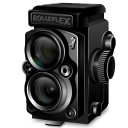
TLR Camera


  • TLR:-
TLR stands for Twin Reflex Camera; it uses two equal sized lenses for taking and viewing pictures. TLRs are twin eyed cameras; it uses a film larger than 35mm.


Point and Shoot Camera


  • Point and Shoot:-
A point and shoot camera does exactly what its name says – it points and shoots. Abbreviated as P&S, they started out with a fixed lens which pointed up to four feet in front. It has a fixed aperture and shutter speed.


Range Finder


  • Range Finder:-
Cameras falling under the range finder category are high end cameras and are used by photography professionals. As these cameras are professional grade they offer a variety of settings to tweak and play with. However these cameras have a limited focal length which ranges from 21 mm to 135 mm.


Mirror less inter-changeable lens camera

  • Mirror less inter-changeable lens camera:-
These cameras are fall between the points and shoot cameras and high end DSLRs. As name suggests, Mirror less camera’s do not have the mirror, which helps in reducing the camera’s footprint.  

 
internet marketing